
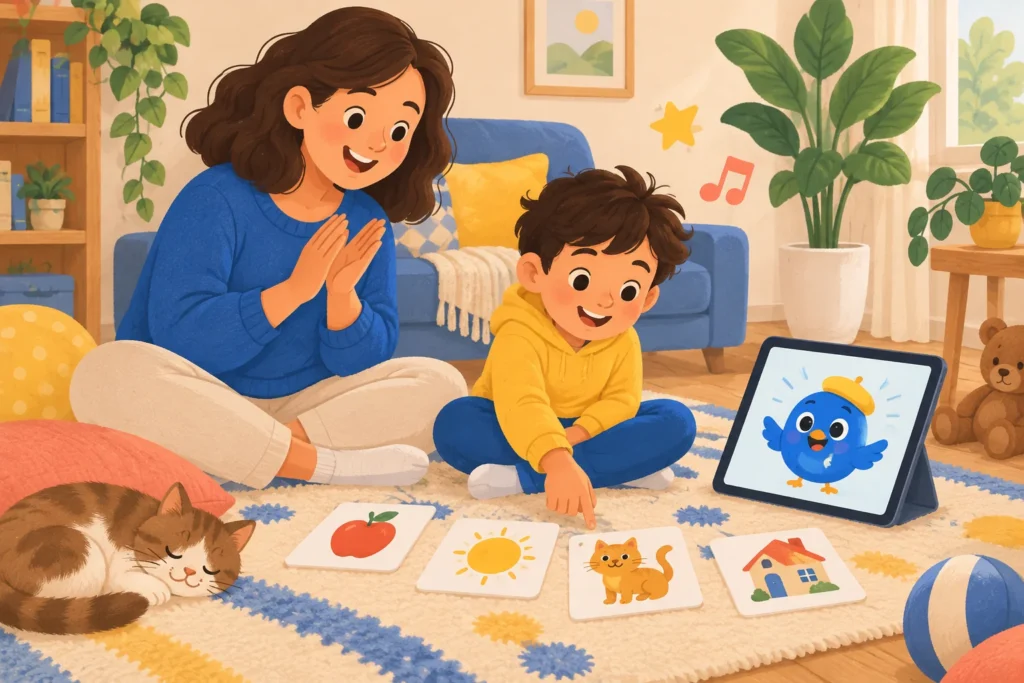
Many parents want their child to learn French, but they worry that they cannot help because they speak no French themselves. The good news is that you do not need to speak it. French for kids at home works well when you guide the routine and cheer on effort.
Many parents search for a way to learn French for children and want a plan they can follow without preparation. This guide covers a short daily routine, stories, games, songs and picture words. It also explains when a live class can help and how to keep your child safe online.
How French for kids fits into a short daily routine
Short, playful sessions tend to suit young children better than one long lesson a week. Ten to fifteen minutes a day is often enough to build a habit without tiring them out.
A simple weekly routine:
| Day | Activity | Time |
|---|---|---|
| Monday | Zazou story, listen and point | 10 minutes |
| Tuesday | Picture words, tap and repeat | 10 minutes |
| Wednesday | Song of the week | 10 minutes |
| Thursday | Word game in the Village | 10 minutes |
| Friday | Free printable workbook page | 15 minutes |
| Saturday | Play a French game together | 15 minutes |
| Sunday | Rest, or sing the song again | 5 minutes |
Keep each session playful and stop while your child still wants more. Ending on a good moment can make them keen to come back tomorrow.
Stories, games and songs
Zazou stories
Zazou, a blue bird, guides the children through short illustrated French stories. Read or play one together, point to the pictures and let your child repeat the words they hear. The Zazou stories are a gentle start.
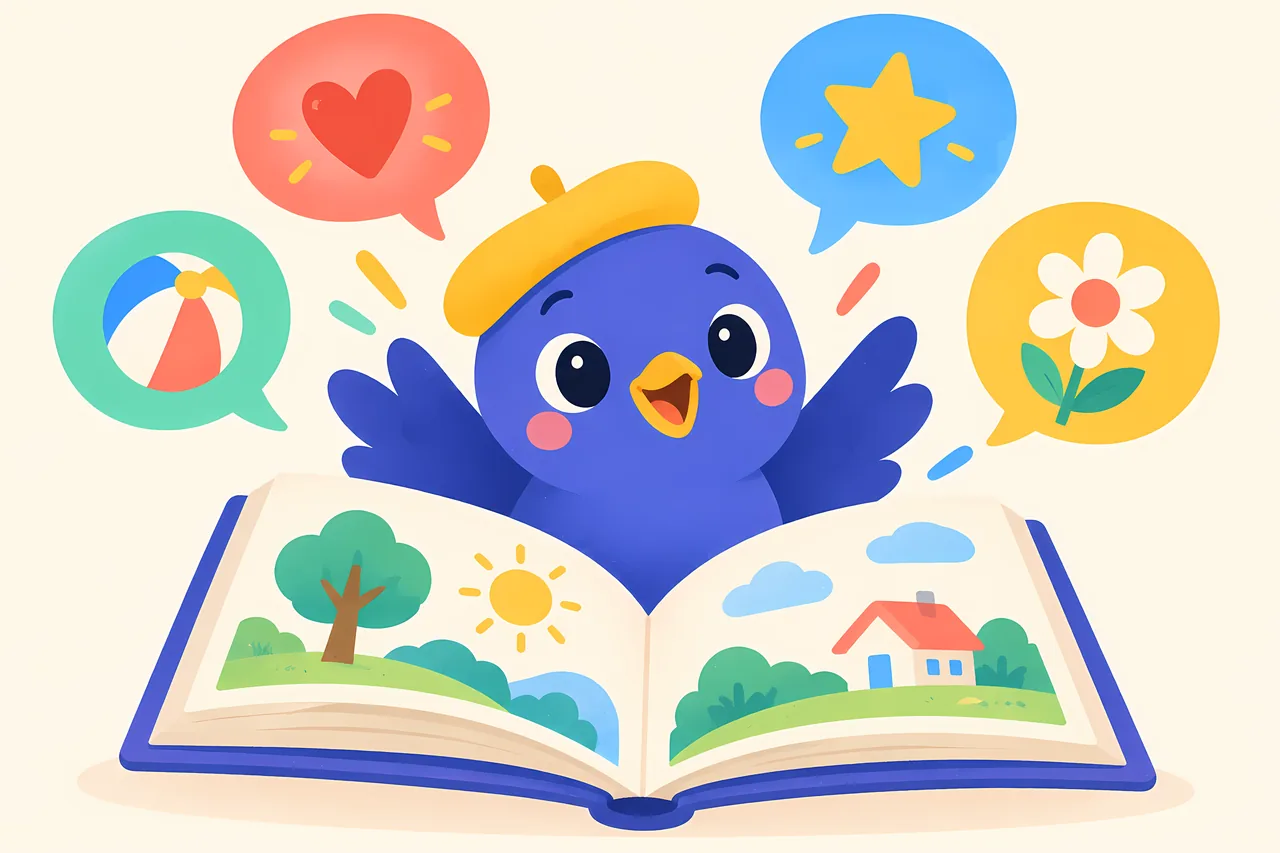
French Adventure
French Adventure is a story course for ages 5 to 12, with 48 lessons from first French words to A1. The stories are animated, and the lessons include games and speaking. The first lesson is free to try, so you can see how it works before you decide.
Songs and picture words
Songs help children remember sounds and rhythm, and picture words link each French word to an image. Use the picture vocabulary to tap, listen and remember together. Ask your child to point at things at home and name them in French, such as la table or le chat.
Games in the Village
The Frencheezy Village has places like the market, the bakery, the school, the park, the house, the clothing shop and the toy shop. Children hear words, win stars and collect stickers. You can sit beside your child, repeat the words with them and celebrate each star.
Free French games for kids give you more ideas for short play sessions.
Picture words at home
Picture words work well because the child sees the object and hears the French word at the same time. Choose a few objects in your home and label them together, such as la porte for the door or la fenêtre for the window.
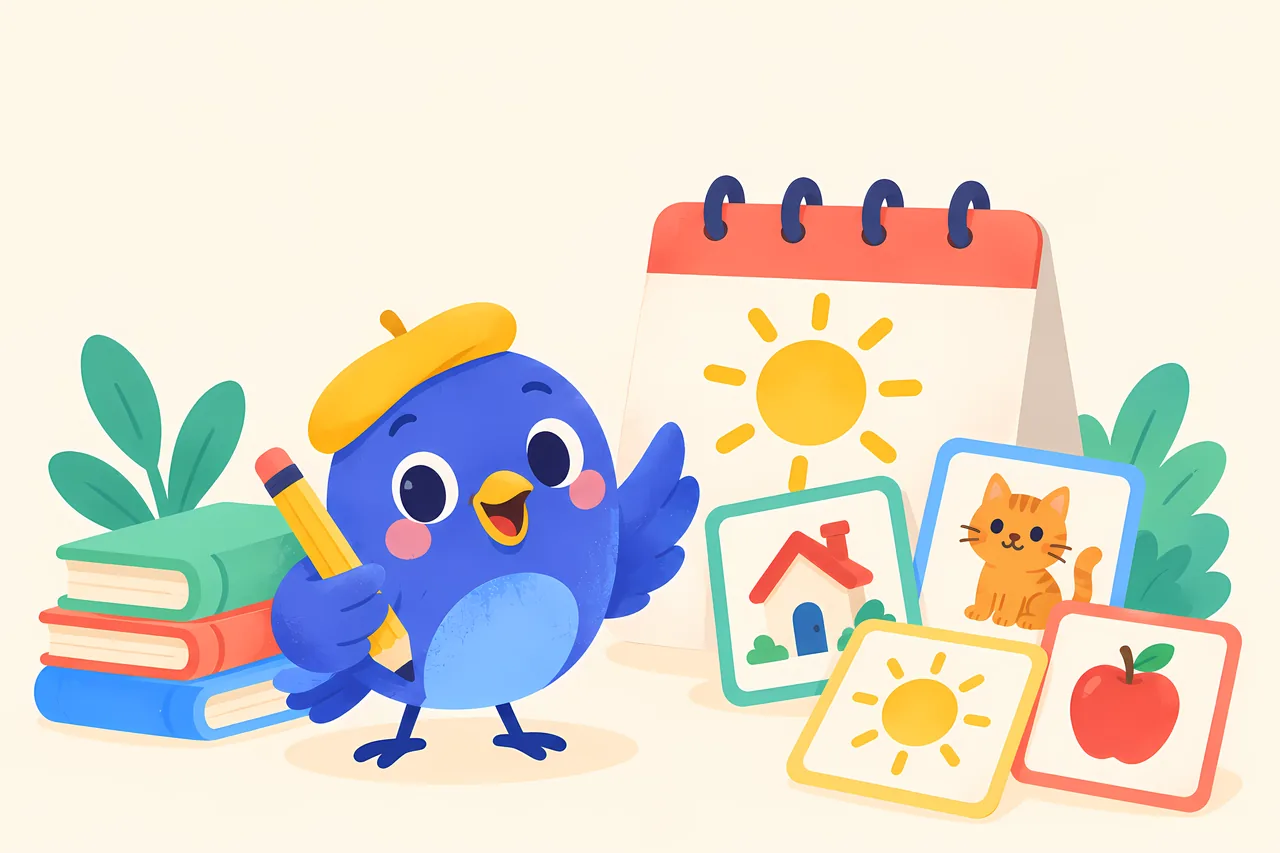
Start with three or four words each week, and use them at meals and at bedtime. Hearing a word in different places can help it stick.
Keep the list visible, such as on the fridge, and let your child add pictures they like.
When to add a live class
A live class can help when your child is ready to speak out loud and would enjoy a real person. Private classes for children are online French classes for kids, held on Zoom with Jouana at a time that suits the family.
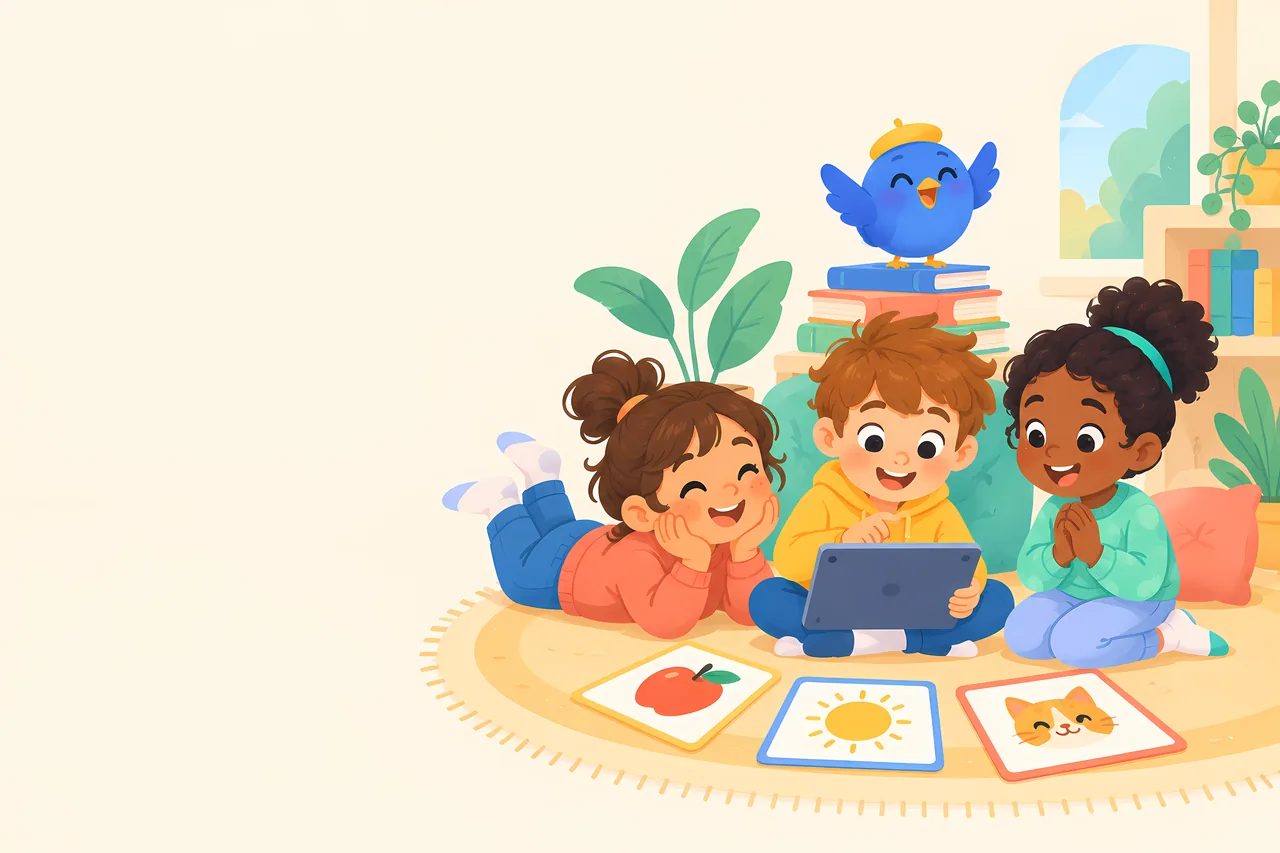
Group classes on Zoom suit a child who would like to learn with their friends. The parents’ FAQ answers the common questions about classes.
If you are not sure where your child starts, the free starting level test finds a good first step.
Keeping it safe online
Look for a learning space that is safe for children. The kids’ site is ad-free, has no chats and asks only for a first name for your child. A parent stays in charge.
Check the children’s privacy page before you sign up, and read the parents’ FAQ for more detail.
Sit with your child during the first sessions, and use a shared room for screen time.
For parents who speak no French
You do not need to be the teacher. Your job is to be curious, patient and present. Ask your child to show you a word, and let them be the expert for a minute.
Learn the words alongside them if you like. Parents who want to learn too can start with the first line of Ma ligne, the adult path from your first words to B2. The first line is free, with no payment needed.
Keep your own practice short, too. Five minutes of listening while your child plays can be a good start.
Common mistakes parents make
Most of these mistakes come from wanting too much too soon. Watch for these habits.
- Correcting every word, which can make a child shy about speaking.
- Making sessions long, so the child gets tired of French.
- Using French only when there is time, instead of a small daily habit.
- Comparing your child to other children.
Praise effort and small wins, such as one new word used in a sentence. That keeps the fun in the routine.
Signs your child is ready for more
Look for small signals that your child is ready for the next step. You may notice that they:
- Repeat new words without being asked.
- Ask what a word means in French.
- Sing along with the songs or finish a sentence you start.
- Ask to speak to a real person, or ask for a class with a friend.
When you see these signs, you can move on to a longer story, a group class or a level test. Go at your child’s speed, not the calendar.
Frequently asked questions
How old should a child be to start learning French?
The French Adventure course is made for children aged 5 to 12, so it starts with first French words. Younger children usually enjoy pictures and songs, while older children often enjoy speaking games.
Do I need to speak French to help my child?
No. Parents do not need any French, because the lessons come with a real teacher’s voice and Zazou guides the children. Your role is to keep the routine going and to praise effort.
How long should a French session last for a child?
For many young children, ten to fifteen minutes a day is a good starting point. Stop while they still want more, and build up slowly if they ask for longer.
When should a child start a live class?
There is no set age. A live class can help when your child is ready to speak out loud. The level test can show where to begin.
Is the kids’ site safe for children?
It is a safe, ad-free place with no chats, and a parent stays in charge. Only a first name is asked for the child. You can read the full details on the children’s privacy page.

Start the first story together
Start small this week. Pick one activity from the table, sit beside your child, and enjoy the first story together. Lesson 1 of French Adventure is free to try, so you can start French for kids at home today.